Looking for a healthier twist to your everyday rice bowl? The answer might be an ancient grain your grandparents already knew!
From foxtail and little millet to bajra and jowar, millets are finding their way back into modern kitchens. And for good reason: they bring variety, interesting textures and valuable nutrients to everyday meals.
But here's the question many shoppers ask:
Which millet should I choose for digestion, heart health, bones or everyday energy?
While no single millet can target or heal a particular organ, different varieties offer different nutritional qualities. Knowing these differences can help you choose grains that suit your meals and dietary preferences.
At Reddot Food, we bring five traditional millets to kitchens across Ireland. Whether you're making a comforting bowl of khichdi on a rainy evening or swapping rice for millet pulao, here's how to get started.
Types of millets and what to cook with each
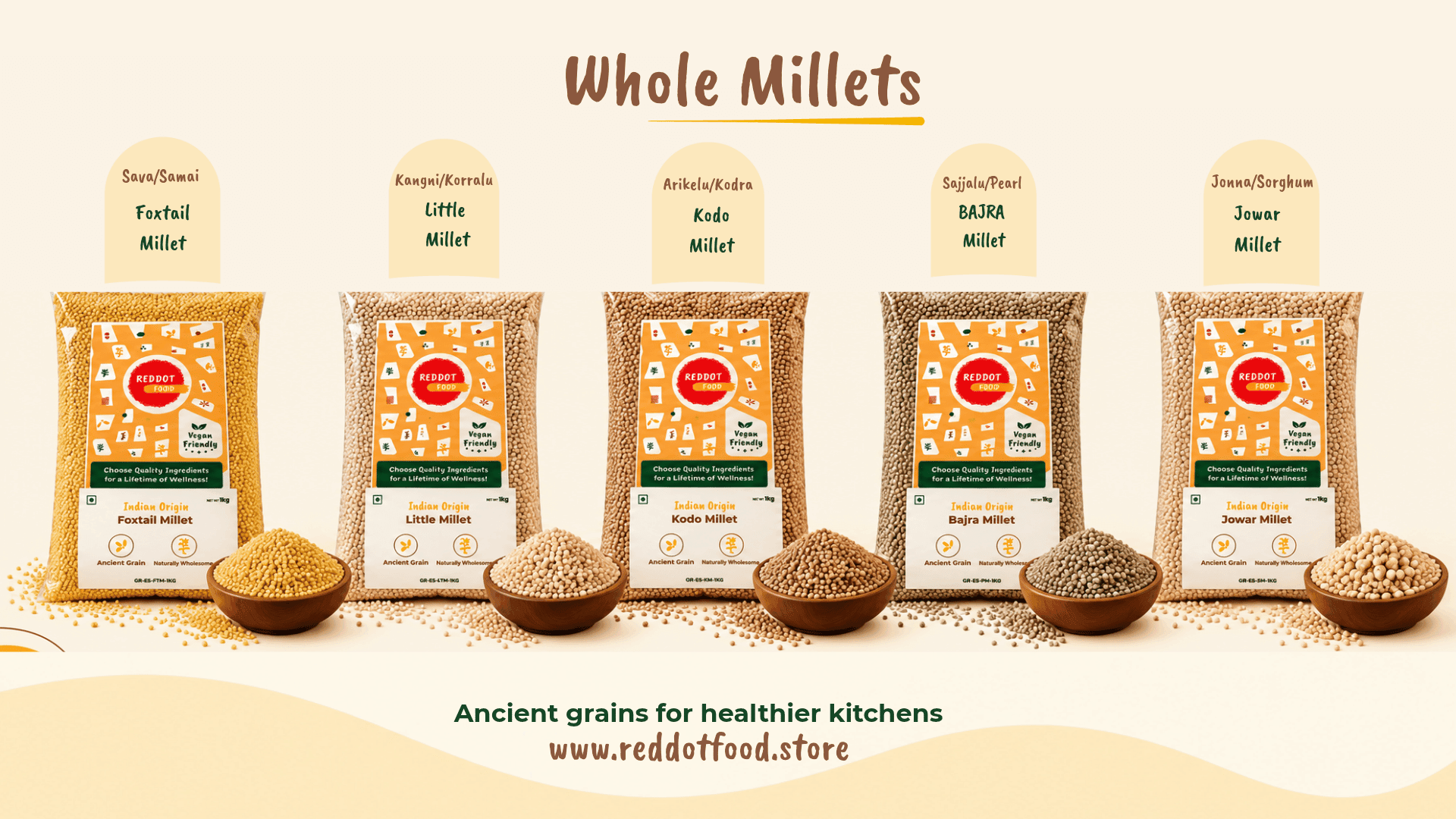
Reddot stocks five whole millets, and each can replace rice in everyday meals.
- Foxtail millet (thinai, kangni, navane) is light and fluffy, good for pulao, upma, dosa and idli.
- Little millet (samai) is unpolished and easy to digest, ideal for khichdi and curd rice.
- Kodo millet (varagu, arikelu) is mild and fibre-rich, good in pulao, porridge and salads.
- Pearl millet (bajra, kambu) is earthy and hearty, lovely as khichdi or porridge in cold weather.
- Sorghum millet (jowar, cholam) is filling and fibre-rich, a sturdy rice substitute.
If you’re new to millets, start with foxtail, which cooks closest to rice. Foxtail, little and kodo are small millets, so they also cook faster than pearl and sorghum.
Which millet is good for what
Millets keep their bran, so they hold on to the fibre, minerals and protein that polished rice loses.
This is general food guidance and there is no medical advice.
How to Cook Millets: A Beginner-Friendly Guide
Cooking millets is simpler than you might think.
Four easy steps
- Rinse: Wash the millet in two or three changes of water.
- Soak: Soak if desired, particularly for larger grains. Smaller millets often need little or no soaking.
- Cook: Add fresh water, bring to a boil, then cover and simmer gently.
- Rest: Leave covered for 5–10 minutes before fluffing or serving
Cooking times are approximate and depend on the grain's processing, age and soaking time. Whole pearl millet and sorghum can take substantially longer than small millets.
For a softer khichdi, use more water. For fluffy pulao, start with less.
How to choose good millets: Whoever you buy from, check three things..
Heavy polishing strips the bran, which is the reason to cook millets in the first place.
Store them properly. Keep millets in an airtight container in a cool, dry place. Buy quantities you can comfortably use while they're fresh.
Where to buy millets in Ireland
Reddot’s millets are carefully sourced and minimally processed. You get a whole millet with its natural color, flavor, and chew. They are also naturally gluten-free
Whether you're shopping in Dublin, Cork, Galway or elsewhere in Ireland, discover grains that fit your favourite Indian recipes from us, orders over €40 ship free, dispatched the next working day
Not sure where to begin? Start with foxtail millet for a familiar rice-like texture, or explore our Traditional Millet Trio to try different varieties.
Better ingredients. More variety. Everyday Indian cooking is simple.
Explore the Reddot Food Millet Collection